Mosiuoa 'Terror' Lekota: A Legacy of Struggle in Pursuit of Freedom and Justice
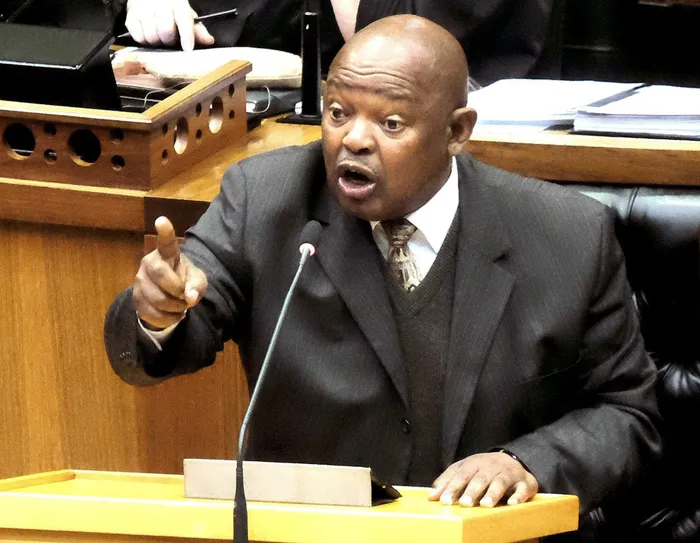
Mosiuoa Terror Lekota belonged to a generation whose open defiance and fearless engagements shaped their characters, says Ambassador Welile Nhlapo.
Image: Ian Landsberg/African News Agency (ANA) Archives
Ambassador Welile Nhlapo
I first met Terror during the intervarsity at the University of Fort Hare in 1970. The intervarsity featured mainly sports, predominantly football and boxing, and some rugby matches between the University of Fort Hare and the University of Natal (Black section), the medical school.
Football was the main attraction, and these black Universities had some of the most prolific players in the National Football League, e.g., Ratha Mokgoatleng, Judah Duiker, John Walker Sibeko, Mosquito Hlatshwayo, Homer Motuba, Jimmy Matsapola and Terror Lekota, to mention just a few.
Politics was another inescapable dominant series of engagements.
This was a year after the founding of the South African Students Organisation SASO) which advocated for the Black Consciousness Philosophy, and at the prime of the University Christian Movement, which promoted Black Theology in particular.
This was a year after the promulgation of the Separate Universities Act, a process leading to the “ autonomy of black “ bush “ campuses from the established universities, UNISA in particular.
These processes awakened black students to the realisation that the challenges facing them at Universities were linked to the national oppression at the hands of the Apartheid regime. Hence, the slogan “we are black first before we are students”.
The identity of black was clearly linked to Africans, Indians and Coloureds as oppressed national groups; this became the basis of the clarion call to unity and solidarity amongst the oppressed. This also formed the basis of the struggles against the education, bantustans and tricameral systems as these were being aggressively implemented.
Banning orders, detentions, torture, and deaths in detentions, closure of universities, and victimisation of student activists were the brutal responses of the regime. Every campus and black community became infested with informers and sellouts from within the ranks of the oppressed.
This was the period of the resurgence of the black trade union movement and workers’ strikes, notably the Durban and Cape Town dock workers, including the Coronation Brick and Lion Match strikes in Durban.
The Black Peoples Convention and other civil society groups and organisations were also formed during this period. All non-violent avenues of protest were being shut as the violence of the Apartheid state was being unleashed against unarmed civilians. The generalised violent response of the regime led to serious organised discussions about the need to consider armed struggle as an option.
Radio Freedom broadcasts from Lusaka and Dar Es Salaam, and the engagements with several political prisoners released from Robben Island who were sentenced for ten years in 1963, helped to sharpen these debates.
A significant result of this was the decision to organise the Pro-FRELIMO rallies to celebrate the victory of the Mozambican people through armed struggle. This was during Terror Lekota’s tenure as the National Organiser of SASO.
Terror Lekota was part of all these struggles and activities, which defined how his resolve was tempered.
His bravery and forthrightness were, in large measure, part of the intensity of the confrontations with various agencies of the Apartheid system. He belonged to that generation whose open defiance and fearless engagements shaped his character. He was a product of the times when he was getting mature until the age when nature took its course.
Everything he has done as a patriot, freedom fighter, a member and leader of SASO, the ANC and COPE, including State Institutions and government, makes him worthy of the accolades and honour being bestowed upon him.
His life, strengths and weaknesses included, if honestly reflected upon and understood in the context of our history of national oppression and struggle, should make us proud to have occupied the same space at the same time with him.
We shall remember him for all he has done for the political freedom we enjoy today. Sincere condolences to his family, comrades, and friends during this period of mourning his passing and celebration of his life.
Hamba kahle, Comrade Terror, until we meet again.
* Welile Nhlapo is South Africa's former Ambassador to Ethiopia, Burundi and the USA. He was also the National Security Adviser to the President of South Africa and is a Struggle Veteran.
** The views expressed in this article do not necessarily reflect the views of IOL, Independent Media or The African.