Reflecting on the Legacy of June 16: The Unfinished Business of SA's Youth
SOWETO UPRISING 50TH ANNIVERSARY
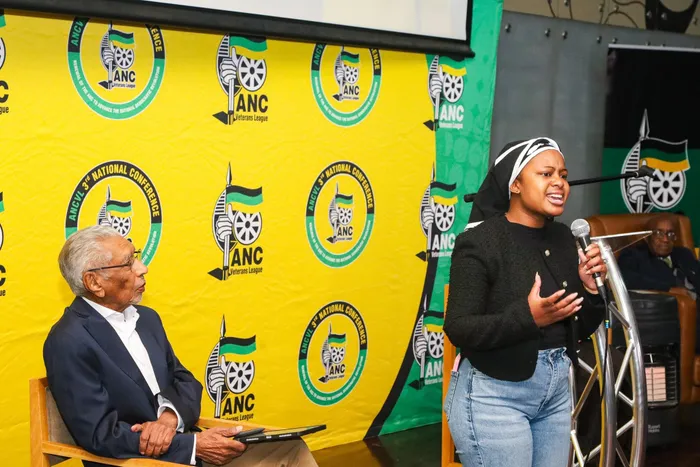
ANC veteran Mac Maharaj (left) listens to a youth participant at the ANC Veterans League Intergenerational Dialogue to commemorate the 50th anniversary of the 1976 Soweto uprising. Maharaj delivered the keynote address at the Dialogue held at Freedom Park on June 15.
Image: ANC/X
Mac Maharaj
Nelson Mandela was a disruptor.
He challenged established ways of thinking and acting. He accepted responsibility for the consequences of his actions. Most importantly, he viewed every setback not as a defeat but as an opportunity to advance social change.
But Mandela did not emerge in isolation. He was part of a generation of young people who refused to accept the limitations of the world they inherited. They challenged conventions, questioned accepted wisdom, and sought new ways to advance the struggle for freedom. He did so within the framework of a collective with the ability to take responsibility for his actions when the consequences did not meet their expectations.
That spirit is particularly relevant as we commemorate the fiftieth anniversary of the Soweto Uprising of 1976.
Over the years, much valuable work has been undertaken and continues to recover and preserve the history of that generation. Some of those who played important roles in those events are still with us. We honour them, and through them we honour the entire Soweto generation. Their achievement was not simply that they protested.
Their achievement was that they reasserted the historic role of young people as agents of social transformation at a time when it seemed that intensifying repression had made it impossible to protest against oppression and exploitation.
Today, I would like us to reflect on a broader question. There is a growing sense that despite significant advances we have made since the advent of our constitutional democracy, our country is faced with a pressing need to overcome the mis-steps of the past thirty odd years; that we have to forge ahead purposefully to build the nation-in the-making on the basis of equality, non-racialism, unity, democracy and the eradication of patriarchy.
There is widespread frustration that a sense the unity of purpose that marked the transition to democracy in 1994 is dissipating. We are increasingly a divided society. This is the time for the youth to rise to the challenge.
Our question, therefore, centres on what enables young people to emerge as leaders of society.
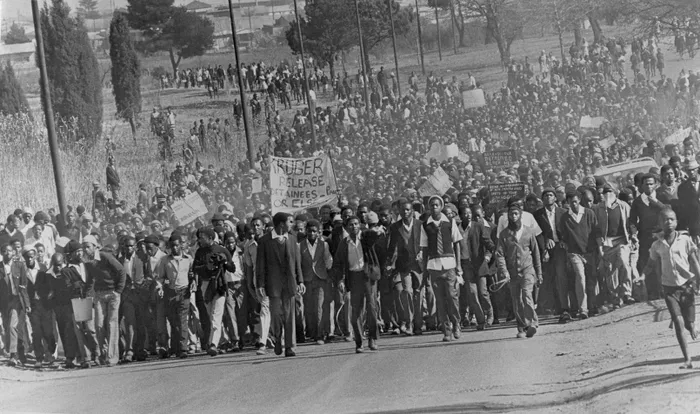
On June 16, 1976, thousands of students in Soweto took to the streets to demonstrate against Bantu Education and the imposition of Afrikaans in their schools.
Image: AFP
What were the qualities that enabled successive generations of young South Africans - from Pixley ka Isaka Seme and Charlotte Maxeke, to Anton Lembede, Nelson Mandela, Oliver Tambo and Robert Sobukwe, to Steve Biko and the students of 1976 - to move beyond representing the interests of youth alone and become leaders of the nation as a whole?
If we can identify those qualities, we may also discover what is required of young people today as they confront the challenges of democratic South Africa.
As the ANC tries to renew itself and seeks to stay relevant, it is essential that this process is strengthened by the energy and fresh input from the youth.
When we look back across our history, four characteristics repeatedly emerge.
First, the courage to challenge convention.
Second, the ability to organise.
Third, the willingness to think critically and develop ideas.
Fourth, the capacity to connect personal concerns to the broader interests of society.
These qualities help explain why some young people become leaders not merely of their generation, but of society as a whole.
Mandela was not born a leader. Like every generation before him, he had to learn. He entered politics at a time when many believed that deputations, petitions and appeals to reason would eventually persuade the rulers of South Africa to abandon racial domination. But Mandela belonged to a generation that came to the conclusion that the methods of the past had reached their limits. Together with Anton Lembede, Walter Sisulu and Oliver Tambo, he challenged established thinking within the ANC itself.
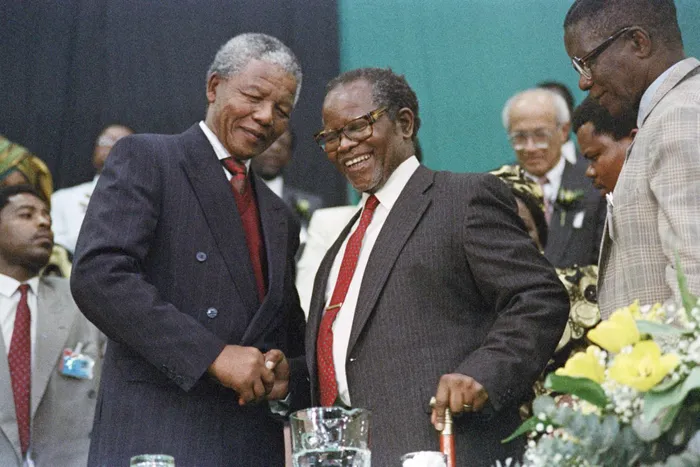
ANC leaders Nelson Mandela (left) and Oliver Tambo at the liberation movement's first national conference following its unbanning held in Durban on July 2, 1991. Together with Anton Lembede, Walter Sisulu and Oliver Tambo, Mandela challenged established thinking within the ANC, says the writer.
Image: AFP
This is an important lesson. Leadership is not obedience to inherited wisdom. Leadership often begins when people respect the past but refuse to become prisoners of it.
The first quality is the courage to challenge convention.
Pixley ka Isaka Seme was only twenty-five years old when he delivered his famous address on “The Regeneration of Africa”. At a time when Africans were encouraged to think of themselves primarily in tribal terms, he advanced a vision of African unity. That vision found organisational expression in the formation of the South African Native National Congress in 1912.
To appreciate the significance of Pixley ka Isaka Seme's contribution, we must remember the conditions in which he lived. The nineteenth century had witnessed the conquest and dispossession of African communities. Resistance had been courageous, but it had largely been fragmented. Communities fought separately and were defeated separately.
Seme understood that the age of isolated resistance had come to an end. His great contribution was not merely organisational. It was intellectual. He recognised that unity was no longer desirable; it had become a historical necessity.
Young people become leaders when they recognise realities that others have not yet fully grasped.
Charlotte Maxeke demonstrated a similar willingness to challenge convention. At a time when women were largely excluded from public life, she insisted that women should be active participants in the struggle. Her leadership of the anti-pass protests in Bloemfontein in 1913 established a principle that would later find powerful expression in the formation of the ANC Women’s League in 1948 and in the Women's March of 1956.
The lesson is important.
Leaders emerge when they challenge accepted assumptions.
But courage alone is not enough.
The second quality is the ability to organise.
The founders of the ANC Youth League understood this. Anton Lembede, AP Mda, Walter Sisulu, Oliver Tambo, Nelson Mandela and their contemporaries were not simply courageous young people. They were organisers.
They brought together networks of young activists. They debated ideas. They published “The Lodestar” as a forum to debate and share ideas. They recruited supporters. They built structures.
Most importantly, they persuaded others.
When the ANC adopted the Programme of Action in 1949, it was because a generation of young people had successfully organised around a new vision for the movement.
Within a few years, many of these young activists – Lembede was 30 years of age, Mda was 28, Sisulu was 32, Tambo was 27, and Mandela was 26 when they established the ANC Youth League in 1944 - had become leaders of the ANC itself.
But they achieved this not because they promoted the interests of youth alone.
They achieved it because they articulated the aspirations of the African people as a whole. The Programme of Action, which was adopted by the 1949 Conference of the ANC, sought national freedom for the African people. Its focus was direct political representation in governance, economic development, raising the standard of Africans in the commercial, industrial and other enterprises and workers in workers’ organisations, the creation of educational centres, and the need to unite the cultural with the educational and national struggle.
The Youth League was not created because young people wanted a separate space for themselves. It was created because they believed the entire liberation movement needed renewal. Their objective was not youth advancement as an end in itself. Their objective was the advancement of the struggle as a whole.
This distinction is critical.
Throughout our history, the youth achieved their greatest successes when they sought to lead society rather than merely represent youth.
The third quality is the willingness to think critically and develop ideas.
Lembede's contribution was not primarily organisational.His lasting contribution lay in his ability to articulate a philosophy. He built on the founding principle of unity to advance the outlook of African nationalism. He argued that Africans had to become active agents in their own liberation. Later generations would build on and modify these ideas.
The experiences of the mineworkers' strike of 1946, the Passive Resistance Campaign, the Defiance Campaign and the Congress Alliance led Mandela, Sisulu and Tambo to broaden their understanding of nationalism.
This process eventually found expression in the Freedom Charter. The Freedom Charter represents a profound act of political imagination. It proclaimed that South Africa belongs to all who live in it. It transformed a struggle for liberation into a vision for a democratic society anchored on the idea that the people shall govern.
The lesson is that leadership requires ideas.
Without ideas, courage becomes impulsive.
Without ideas, an organisation lacks direction.
The fourth quality is perhaps the most important.
Leaders emerge when they connect their own concerns to the broader interests of society. This was one of the great achievements of the Soweto generation. The students who marched on 16 June 1976 initially mobilised around a specific grievance: the imposition of Afrikaans as a medium of instruction.
But history transformed them.
The brutality of the state's response forced them to confront larger questions about the nature of apartheid itself. As the uprising developed, students began to reach out to workers. They began to engage with parents. They sought to build alliances. Their demands expanded beyond education to encompass the broader condition of oppression under apartheid.
In this process, they ceased to be merely student leaders. They became leaders of a national struggle.
What makes their achievement all the more remarkable is that they acted under conditions very different from those faced by earlier generations.
The founders of the ANC Youth League knew the history of the ANC. The Soweto generation was largely denied access to that history. The banning of political organisations, censorship, imprisonment and repression created a rupture between generations. Many young people knew little about the traditions that had shaped the struggle before them.
Unlike previous generations, the youth of 1976 inherited very little organised memory. The ANC was banned. The PAC was banned. The Communist Party was banned.SACTU was immobilised. The leaders of the liberation struggle were imprisoned, exiled or silenced. The history of resistance was largely absent from the schools.
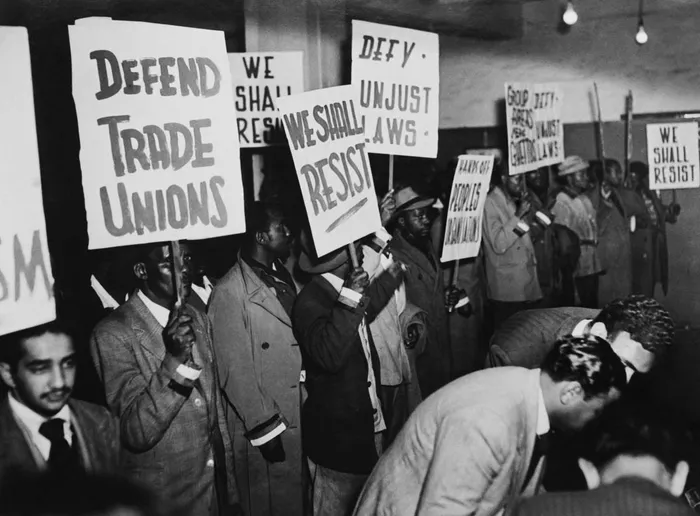
Supporters of the ANC led Congress Movement protest against apartheid laws in Johannesburg on August 12, 1952. The protest was part of nationwide defiance campaign and culminated in the historic Congress of the People and the adoption of the Freedom Charter in Kliptown on June 26, 1955.
Image: AFP
Yet history has a way of reasserting itself. The conditions under which young people lived became so intolerable that they rediscovered the necessity of resistance. Initially, they saw themselves as students confronting educational injustice.
But struggle is a powerful teacher. As they confronted the power of the apartheid state, they discovered that their problems could not be separated from the condition of the African people as a whole.
They discovered the need for alliances. They discovered the importance of workers. They discovered the necessity of organisation. They discovered politics.
Resistance by their parents and the earlier generation had been met with imprisonment and exile. Mandela and his colleagues were serving life imprisonment. The laws prevented the media from telling the public about their views or showing photos of them. Oliver Tambo and Dr Dadoo were in exile. Every effort to rekindle the struggle was met with detention without trial, torture, imprisonment and the harassment of the families of activists.
Under these conditions, parents were trapped in survival mode. Caution became their watchword. They met the plight of their offspring with concern about their safety and future. Where their children saw the need to stand up, the parents saw danger and risk. This led the students to initially avoid guidance from their elders.
Yet despite these handicaps, they found ways to organise, to learn, to adapt and to lead.
Even though they felt that their parents and elders had succumbed to apartheid, that they had become conditioned to finding ways of making a living as compromised people, the students found it necessary to call on the workers to engage in work stoppages in support of the actions of the students.
Their first call for a stay away received relatively little support. This brought to light the need for the students to interact with the workers in order to make them appreciate why it was necessary for the workers to support them. The result was that the 3rd stay away called in 1976 was a resounding success.
During the 13-15 September stay away, the students called for a student-worker alliance for the overthrow of oppression. Their demands had grown from “away with Afrikaans as a medium of instruction in our schools” to the overthrow of oppression as a whole. Coloured and African workers in Cape Town joined this work stoppage.
In the case of the earlier stay away on 31st August, the growing actions of the students were challenged by hostel dwellers in Mzimhlope hostel in Meadowlands. The hostel dwellers stormed through sections of the township in Soweto, attacking houses, murdering and intimidating the residents. There was evidence that this had been incited by the police.
Faced with this attack from the hostel dwellers, the students had to find ways to reach the hostel dwellers, to engage with them and explain to them the reasoning behind the work stayaways. It is this necessity to shape their demands, no longer exclusively in their own interests, but to place them in the context of a larger interest of opposing national oppression, that enabled them to succeed in getting the hostel dwellers no longer to stand against them, but also to take part in the 3rd stay away.
These lessons that the students learnt in the midst of battle were severely hampered because there were no worker organisations in the form of unions and no groupings of their elders to which the students could turn to in order to get workers and parents to rally to the support of the uprising. Such mobilisation found its rightful place in the decade of the eighties.
Struggle became their teacher.
They learned through experience what previous generations had learned over decades.
They discovered that courage without organisation was insufficient.
They discovered that protest without alliances could not be sustained.
They discovered that leadership required persuasion and not merely defiance.
The result was not simply an uprising. The result was a generation that helped transform the political landscape of South Africa.
The Soweto Uprising was eventually suppressed. But its political impact could not be suppressed. The tensions and issues that remained unresolved by the Soweto generation found their resolution in the decade of the 1980s.
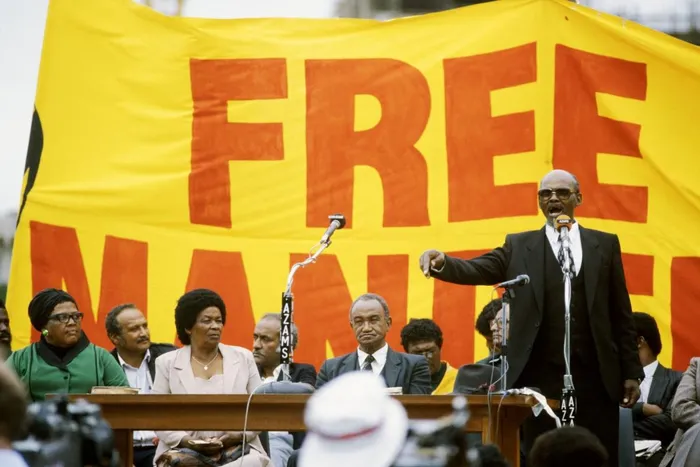
Leaders of the United Democratic Front (UDF) (from left) Florence Mkhize, Albertina Sisulu, Archie Gumede and Heny Fazzie at a Free All Political Prisoners rally held in Durban on December 15, 1985.
Image: AFP
Its legacy lived on in the growth of community organisations, the emergence of stronger trade unions, the formation of the United Democratic Front, the launch of the Congress of South African Trade Unions, the uprisings that commenced in 1983 and the resurgence of mass resistance during the 1980s, the intensification of armed activity led by uMkhonto weSizwe, the expansion of international solidarity, and the emergence of the ANC as the leading force of the struggle against apartheid.
The youth had once again become a catalyst for national change.
Today, we live under conditions very different from those faced by previous generations. We live in a constitutional democracy. We enjoy freedoms for which previous generations struggled and sacrificed. Democracy changed the terrain of struggle.
Previous generations fought to secure the right to organise. We possess that right.
Previous generations fought for the right to vote. We possess that right.
Previous generations fought for the right to participate in public life. We possess that right.
We can protest. We can debate. We can participate in shaping public policy.
The challenge before us is therefore different. Why has democratic participation weakened? Why are so many young people alienated from public life? Why has active citizenship not become the defining feature of our democracy? We have a long way to go before we can resolve all our challenges.
We remain one of the most unequal societies in the world. Millions of young people face unemployment and insecurity. Patriarchy continues to diminish the lives of women. Crime and corruption undermine public confidence. Poverty and inequality continue to divide our people.
These are challenges in a complex and changing world. Climate change threatens our existence. Innovation is unstoppable. We can see a world where scarcity no longer exists, yet the rich grow richer, and inequality deepens. We have only just entered the world of Artificial Intelligence.
The challenge before today's youth is therefore different, but no less significant.The question is not whether young people possess the energy, courage and impatience for change. Every generation of youth has possessed those qualities.
The real question is whether they can transform those qualities into leadership. Can they organise? Can they develop ideas? Can they build alliances? Can they connect their aspirations to the broader needs of society?
These are not questions for the youth alone.
They are questions for all generations. Intergenerational dialogue is not about one generation lecturing another. No generation begins from a blank page. Every generation inherits both achievements and unfinished tasks from those who came before.
Intergenerational dialogue matters because it enables us to understand what has been achieved, what remains unresolved, and what responsibilities now fall upon us.
History is therefore not simply a record of the past. It is a conversation between generations about the future. It is about mutual learning.
It is about older generations sharing experience without demanding obedience. It is about younger generations bringing fresh insights without dismissing history.Every generation inherits a legacy. Every generation also has a responsibility to enrich that legacy.
Seme's generation inherited fragmented resistance. Lembede's generation inherited the limitations of petitions and deputations. Mandela's generation inherited a liberation movement that required mass mobilisation. The Soweto generation inherited repression and political silence. The democratic generation inherited freedom but also inequality, poverty and unfinished transformation.
The youth of 1944 challenged the conventions of their time. The youth of 1976 shattered the culture of fear.
The youth of democratic South Africa face the challenge of building a society that gives practical meaning to the values contained in our Constitution and the vision articulated in the Freedom Charter.
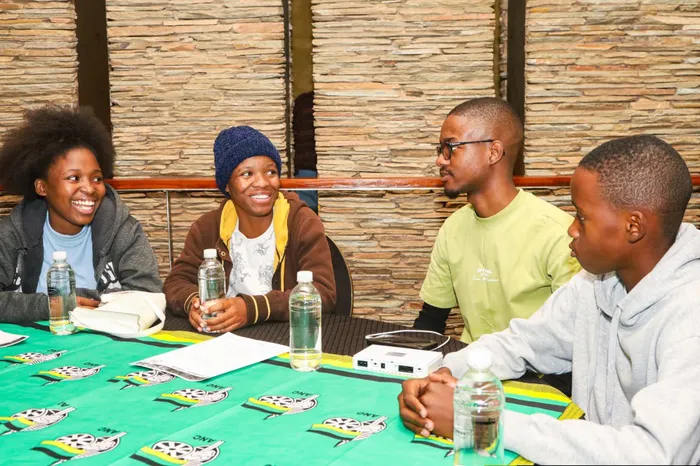
Youth delegates in discussion at the ANC Veterans League's Intergenerational Dialogue held at Freedom Park on June 15.
Image: ANC/X
Our Constitution is the product of struggle. It is premised on the need for redress, reconstruction of our society at all levels, including the economy, reconciliation and building a nation that unites all of us.
It is a covenant that calls on us to build a country based on equality, non-racialism, unity, democracy and the eradication of patriarchy. It was written into law by a Constitutional Assembly whose composition transcended categorisation by race, colour, class, ethnicity, and belief systems.
It is an empowering Constitution. It encapsulates the future shaped by our struggles. The Bill of Rights ensures the protection of an individual's rights. It places an instrument in the hands of the people.
The problems we face are not because the Constitution has failed us. Rather, we have failed our Constitution. We have allowed reconstruction, reconciliation and nation-building to be the domain of those we elect, whereas it gives us the space to move our country forward based on participatory democracy.
Our democracy was never intended to reduce citizens to spectators.
It was never intended that people should vote every five years and then retreat from public life. The vision that animated our struggle was one of active citizenship. The people were not expected merely to elect leaders. They were expected to remain participants in shaping society.
Democracy is strongest when citizens organise themselves and weakest when they surrender responsibility to others. Our march to freedom has taught us that it is the people who make history and that leaders are servants of the people.
Our history leaves no doubt that young people can rise to that challenge.
The youth of 1912 inherited a divided people.
The youth of 1944 inherited a frustrated people.
The youth of 1976 inherited a silenced people.
The youth of 1994 inherited a democratic South Africa.
The youth of today inherit a nation that remains unfinished.
Their task is not to repeat the past. Their task is to learn from it. Their task is to imagine a future equal to the sacrifices of those who came before them. The future will not be built by one generation acting alone.
It will be built through dialogue. Leadership emerges through a conversation - sometimes cooperative, sometimes argumentative - between generations.
It will be built through participation. It will be built through shared responsibility. It will be built by citizens who understand that the people make history and that leaders are servants of the people. That is the enduring lesson of our struggle.
And that is the challenge before us today.
* Mac Maharaj, an ANC Veteran, delivered this keynote address to the ANC Veterans League Intergenerational Dialogue to commemorate the 50th anniversary of the June 16 uprising held at Freedom Park on June 15.
** The views expressed do not necessarily reflect the views of IOL or Independent Media.