IDAC, SAPS 'Turf Wars' Eroding Public Confidence
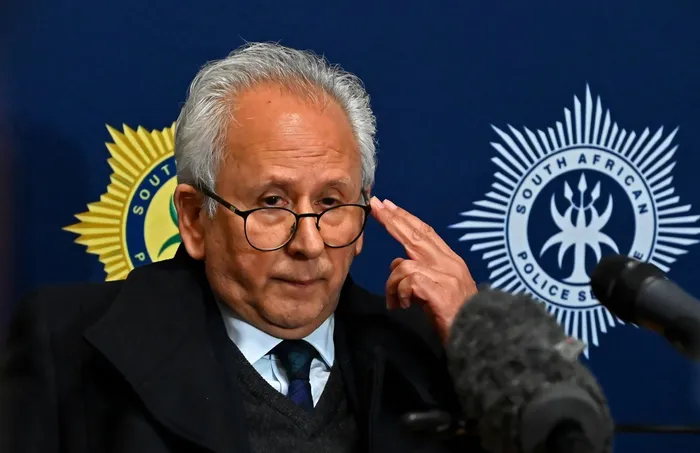
Police readiness Acting Police Minister Firoz Cachalia described the feud between IDAC and the SAPS as 'messy' and expressed concern over the apparent lack of coordination.
Image: Independent Media
Prof. Bheki Mngomezulu
Sour relations amounting to a ‘turf war’ between the Investigating Directorate Against Corruption (IDAC) and the South African Police Service (SAPS) have devastating effects on the image and credibility of both institutions. Importantly, this feud does not instil public trust in them.
It is for this reason that the Independent Policing Union of South Africa (IPUSA) has called for a truce between the two institutions.
The union’s argument, which is a valid one, is that the ongoing hostility between IDAC and SAPS negatively affects attempts to uphold the rule of law and diminishes public trust as the country prepares for the upcoming Local Government Election (LGE). For these reasons, the concerns by IPUSA are genuine and reasonable.
What is more concerning is that relations between the two institutions have surfaced during an election year. This is the time when these institutions should be pulling in the same direction to ensure the safety of candidates and the electorate. What is currently happening is regrettable.
From 2009, SAPS and the Scorpions did not have good relations. Now it is IDAC’s turn. But while it is true that sour relations between IDAC and SAPS have been simmering for some time, this feud and mistrust reached a saturation point during the month of June 2026. Such a situation could have been averted had the IDAC leadership demonstrated leadership dexterity.
Unprovoked, IDAC issued warrants of arrest for top SAPS members, demanding that they report to the Brooklyn Police Station in Pretoria on Thursday, June 18, 2026. This included the Head of Crime Intelligence, Dumisani Khumalo and the Head of Analysis and Coordination, Nozipho Precious Madondo. News also broke that KwaZulu-Natal Provincial Commissioner Lieutenant General Nhlanhla Mkhwanazi was among those set to be arrested.
The crimes they allegedly committed were not explicit, except that these individuals were accused of fraud and corruption. The general accusations that were in the public domain were that they were linked to failed or suspended arrests and concerns about operational interference.
Intriguingly, when these SAPS leaders presented themselves to be processed, no formal charges were ever laid against them. As such, they were not arrested. To make matters worse, IDAC officials were nowhere to be seen when SAPS leaders showed up.
This was an indictment of IDAC, resulting in SAPS leaders accusing IDAC of exceeding its mandate with the intention to embarrass the SAPS leadership by using baseless accusations.
What further complicated this matter was when Police Minister Firoz Cachalia, who is holding the fort while Minister Senzo Mchunu is on special leave, told the public that his office was blindsided by the planned arrests of top SAPS commanders. He stated that he also learned about this matter through the media.
That too was an embarrassment to him, his office, SAPS, and IDAC. Inevitably, this raised questions among members of the public about respect for protocol by those entrusted with the safety of the South African citizens.
This incident has prompted the lawyers representing the implicated SAPS leadership to approach both the Minister of Justice and Constitutional Development, Mmamoloko Kubayi and IDAC’s Ombudsman, Retired Judge Takalani Joseph Raulinga, to lay formal complaints about IDAC’s abuse of its power.
The lawyers stated in their letter dated June 22, 2026, that this matter was badly handled. Only time will tell how these officials will respond to the concerns raised.
Even parliament has demanded answers from both IDAC and the National Prosecuting Authority (NPA). Parliamentarians want to know the root causes of the long-brewing conflicts and the evident lack of coordination within the security cluster. This is an important intervention so that a solution to this impasse could be found.
But is the feud between the two institutions (IDAC and SAPS) necessary and justifiable? Does their mandate overlap? To both questions, the answer is an emphatic no! This submission is expounded below.
IDAC derives its authority from the National Prosecuting Authority Amendment Act, which was signed by President Cyril Ramaphosa on June 27, 2024. This institution was set up to be a permanent entity that was going to be a prosecution-led unit within the NPA. It replaced the Investigating Directorate (ID), which was established in 2019.
Its mandate is to investigate complex forms of corruption in the country. IDAC’s mandate, as stated in the Act, is to investigate, and where appropriate, institute criminal proceedings and carry out necessary functions incidental to investigations and instituting criminal proceedings, relating to serious, high-profile or complex corruption or commercial or financial crime cases.
These cases arise from the recommendations of commissions of inquiry; referred to the Investigating Director by the National Director; referred to the Investigating Director in terms of section 27 of the NPA Act; and relating to such other existing offences or categories of offences as determined by the President by Proclamation No. 20 of 2019.
The difference between ID and IDAC is that the former was not a permanent unit. Moreover, the ID did not possess the required criminal investigative powers. As such, it had to rely on a patchwork of seconded staff from various partner entities who could be recalled at any time, and whose line function managers remained in the partner entities, outside the ID.
When IDAC was established, it was given the power to recruit permanent criminal investigators with full police powers. These recruits would work solely under the direct leadership of the Investigating Director and IDAC’s teams of prosecutors, together with forensic experts and analysts. The guiding principle for this unit was the prosecution-led model.
SAPS’ mandate is to create a safe and secure environment for South Africans. It derives its mandate from Section 205(3) of the Constitution, which states that SAPS must prevent, combat, and investigate crime, maintain public order, protect and secure the inhabitants of the Republic and their property, and uphold and enforce the law.
If these roles and responsibilities are so clearly stated, why should the two institutions clash and risk losing public trust? All concerned parties must thoroughly ponder this question.
* Prof. Bheki Mngomezulu is Director of the Centre for the Advancement of Non-Racialism and Democracy at Nelson Mandela University.
** The views expressed do not necessarily reflect the views of IOL or Independent Media.