Delinquent Leaders Eroding Public Trust in Security Cluster Watchdogs
CRIMINAL JUSTICE SYSTEM
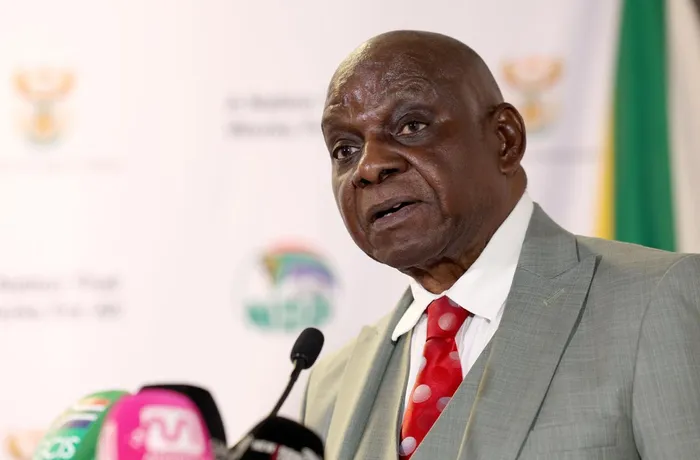
The Investigating Directorate Against Corruption (IDAC) ombudsman, retired Judge Takalani Raulinga was recently appointed to conduct oversight over the work of the anti-corruption institution. When regular oversight fails, government resorts to ad hoc commissions, resulting in duplicated investigations and costs, says the writer.
Image: Supplied
Dr. Reneva Fourie
Many South Africans view the Zondo Commission, the Africa Expert Panel, and now the Madlanga Commission with increasing fatigue. Although the Madlanga Commission is beginning to show results, most commissions are lengthy, costly and produce reports that are rarely acted upon.
Yet these commissions often duplicate functions that permanent statutory bodies, established over the past three decades, were already created to perform. Those bodies have simply been starved, sidelined or captured, one after another, hence the endless commissions.
The Investigating Directorate, now the Investigating Directorate Against Corruption (IDAC), is a permanent, prosecution-led unit focused on high-profile corruption, organised crime and serious commercial offences.
Its first head, Hermione Cronje, resigned in December 2021 and left in March 2022. She later told a public interview panel that a severe skills shortage and deep dysfunction inside the NPA were among the reasons for her leaving.
In 2026, the Department of Justice established the IDAC Ombud, chaired by retired Justice Takalani Raulinga. The Ombud is currently handling formal complaints against the head, Andrea Johnson. Witnesses at the Madlanga Commission have also alleged political interference and unlawful activities, including extortion and undue interference in Crime Intelligence cases. IDAC denies these allegations.
The Directorate for Priority Crime Investigation (DPCI, commonly known as the Hawks) was established in 2012 to address national priority offences such as organised crime, corruption and serious economic crimes. Over the past decade, the unit has become dysfunctional due to weakened accountability, political interference, declining leadership integrity and persistent resource shortages.
The Independent Police Investigative Directorate (IPID), formed from the Independent Complaints Directorate, investigates deaths in custody, torture, rape by officers, and other serious police crimes. On paper, it provides strong constitutional protection.
However, IPID has been overwhelmed by a case backlog of over 14,000 matters. Investigators carry disproportionately high caseloads, with staff numbers increasing only marginally from 387 to 421 over two years.
Worse still, IPID lacks specialised forensic and technical skills and is forced to rely on the South African Police Service to collect evidence, the very body it investigates. Dysfunction in IPID stems from chronic under-resourcing, inadequate skills and a systemic failure by SAPS to implement IPID’s recommendations. Political interference and resistance from police structures further undermine its work.
The Civilian Secretariat for Police Service was established by law in 2011 to provide civilian oversight of SAPS, develop policy, monitor implementation of IPID recommendations and support the DPCI judge.
Its strength is its policy advisory role and its position as a bridge between the minister and the police service. Yet annual oversight reports reveal weakened controls, slow consequence management and limited oversight capacity, rendering it a toothless watchdog.
The Office of the Inspector-General of Intelligence was created under the Intelligence Services Oversight Act of 1994 to monitor and review intelligence activities. Its strength is its constitutional status and its role in assuring the public and Parliament about the conduct of intelligence services.
However, the office has faced systematic resistance from all three intelligence services, namely the former State Security Agency, Defence Intelligence and police Crime Intelligence. The oversight office has historically been funded by the very agency it monitors, compromising its autonomy.
Imtiaz Fazel was appointed in 2022 to rebuild the office. Having had his work subjected to political interference, as demonstrated in his recent affidavit filed at the High Court, he was suspended by President Ramaphosa in October 2025, ironically, in the middle of the Madlanga Commission hearings into political interference in the criminal justice system.
The Defence Secretariat, established to ensure civilian control and accountability over the military, is experiencing the gradual erosion of its capacity and authority. For most of its existence, the Judicial Inspectorate for Correctional Services' chief executive was appointed by and accountable to the National Commissioner of Correctional Services, the very official JICS is supposed to hold to account.
Its funding also flowed through the Department of Correctional Services rather than directly from Treasury. The JICS was only converted into a more independent National Government Component in 2024, and staff continue to describe funding shortfalls, obstruction from department officials and delays in obtaining post-mortem reports on inmate deaths.
Parliament’s Joint Standing Committee on Intelligence and Portfolio Committee on Police provide additional oversight. The Madlanga Commission was established because Parliament failed to address Lieutenant General Nhlanhla Mkhwanazi’s July 2025 allegations regarding the suspended police minister and criminal syndicates within the justice system.
When regular oversight fails, government resorts to ad hoc commissions, resulting in duplicated investigations and costs.
A clear pattern runs through these various bodies. Each body was created with a proper legal mandate. Then, particularly the oversight bodies, were left dependent on the very institutions they oversee for money, staff, premises or technology.
Leadership positions were left vacant for long stretches, or hampered by political interference, or filled with people chosen for loyalty rather than independence. Weak bodies produce weak accountability, which produces scandals large enough to force a president to appoint another commission at enormous public expense.
The proliferation of commissions is a symptom of leadership failure. To restore public confidence, there must be consistent political commitment to respect existing entities, empower them and act on what they uncover.
Staffing should follow transparent merit-based processes with fixed timelines to avoid prolonged vacancies. Transgressors should be disciplined. Likewise, the manipulation of disciplinary processes to advance nefarious interests should end.
Oversight institutions should receive secure multi-year funding approved directly by Parliament to reduce executive influence. Watchdog recommendations should require mandatory government implementation plans, with progress reported publicly every six months.
Expanding digital case management systems across oversight bodies would reduce backlogs and improve transparency. Whistleblower protections should also be strengthened, as many abuses are only exposed when insiders take personal risks.
While accountability is imperative, South Africans are currently paying for it twice, once through their taxes for institutions built to do the job, and again through commissions called in because those institutions are not able to do their work effectively.
Fixing the existing institutions and enforcing consequence management would cost far less than another Zondo or Madlanga Commission or establishing yet another institution.
* Dr Reneva Fourie is a policy analyst specialising in governance, development and security.
** The views expressed do not necessarily reflect the views of IOL or Independent Media.